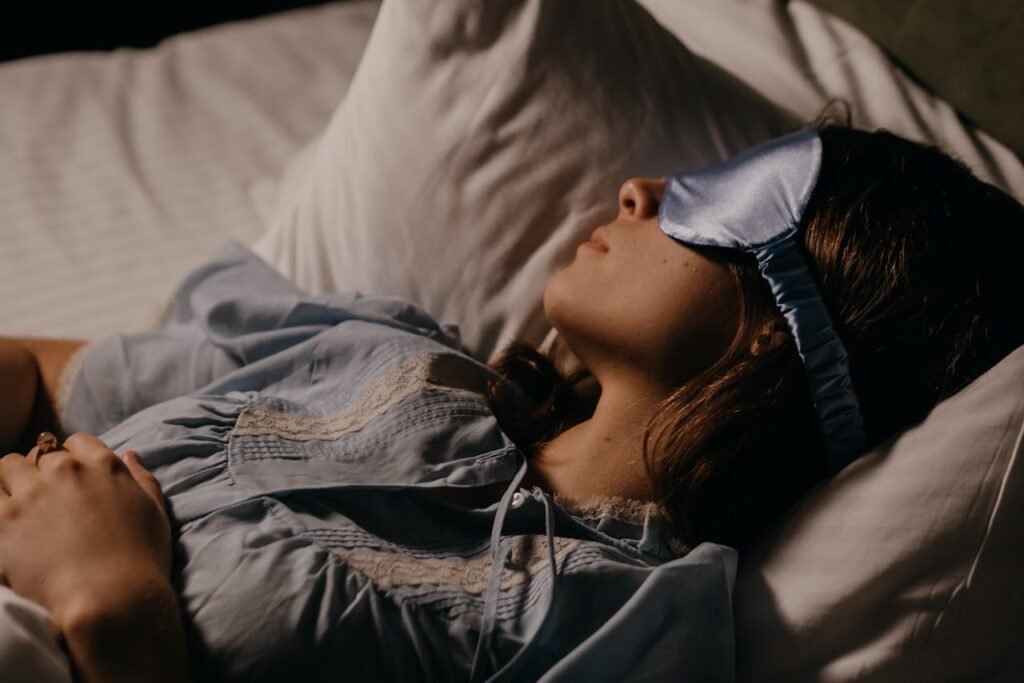
You are exhausted. You climb into bed ready to finally rest — and your mind switches on. Tomorrow’s to-do list, a conversation from earlier, a worry with no solution at 1 a.m. The harder you try to sleep, the more awake you feel.
If this sounds familiar, you are caught in one of the most common and frustrating cycles there is: the stress-sleep loop. The good news is that it is well understood by science, and there are genuinely effective, calming ways to break it.
This guide explains what is actually happening in your body when stress steals your sleep — and six evidence-based ways to settle your nervous system so rest can return.
So many people come to me convinced something is “wrong” with them because they cannot switch off at night. Almost always, the issue is not the sleep itself — it is an overstimulated nervous system that has not felt safe enough to power down. When we gently calm that system, sleep tends to follow on its own.
The Science: Why Stress and Sleep Fight Each Other
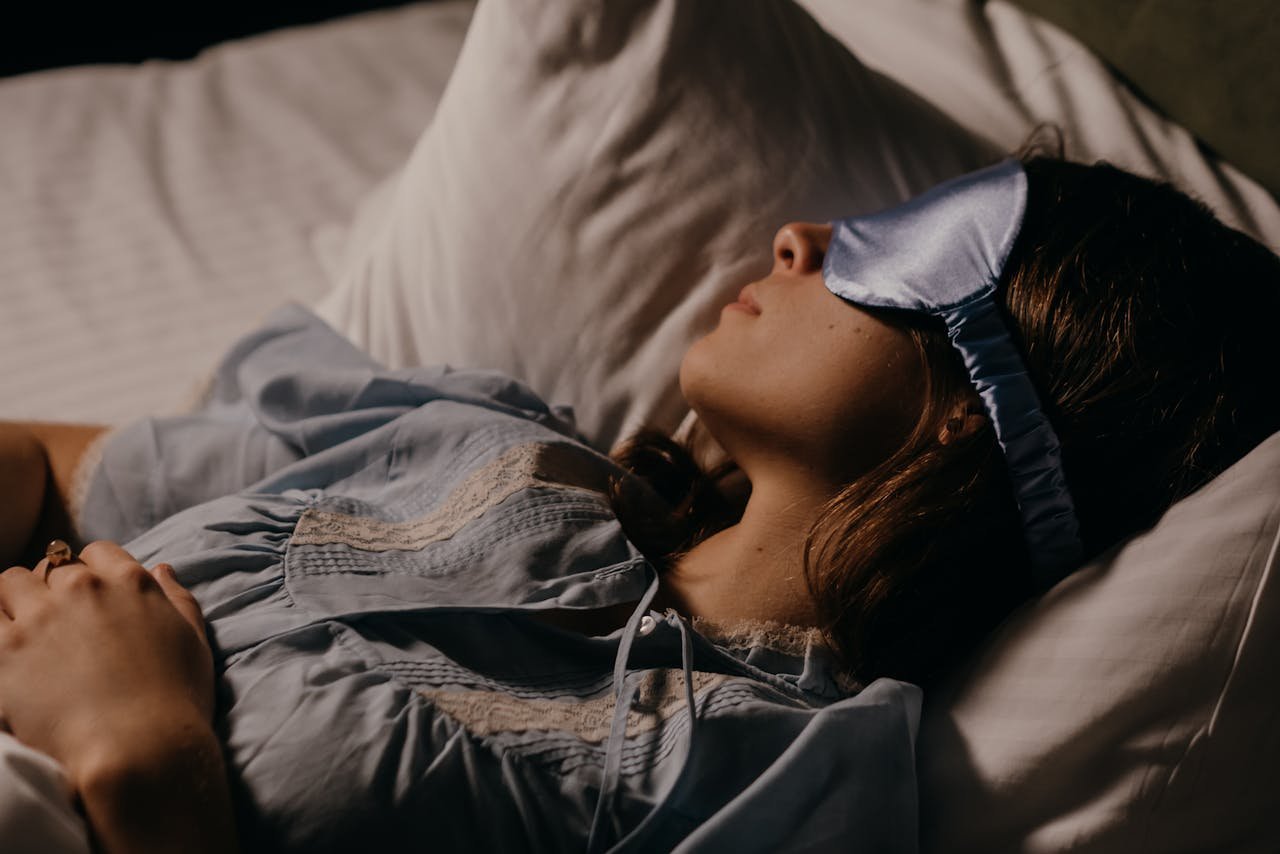
When you are stressed, your body activates its “fight or flight” response, driven by the hypothalamic-pituitary-adrenal (HPA) axis. This releases cortisol, your main stress hormone, along with adrenaline. Your heart rate rises, your mind sharpens, and your body prepares for action — the exact opposite of what you need to fall asleep.
Normally, cortisol falls in the evening to let you wind down. But research shows that people with insomnia tend to have higher cortisol levels in the evening, which is linked to more nighttime awakenings. In a stressed state, cortisol, heart rate, body temperature, and oxygen consumption all rise — keeping the body in a kind of “alert” mode when it should be resting.
Here is the cruel part: it works both ways. Poor sleep is itself a stressor that further activates the HPA axis. So stress disrupts sleep, and the resulting bad sleep raises stress — a self-feeding loop that can, over time, contribute to chronic insomnia. Studies describe this as a genuine “vicious circle.”
There is also a state researchers call hyperarousal — a 24-hour condition of elevated mental and physical activation that is considered a core feature of insomnia. This is why “just relax” never works on demand: your system is physiologically wound up, and it needs to be gently down-regulated, not commanded.
The takeaway: the path back to sleep is not about forcing yourself to sleep. It is about calming the nervous system so your body feels safe enough to let go.
6 Evidence-Based Ways to Calm Stress and Sleep Better
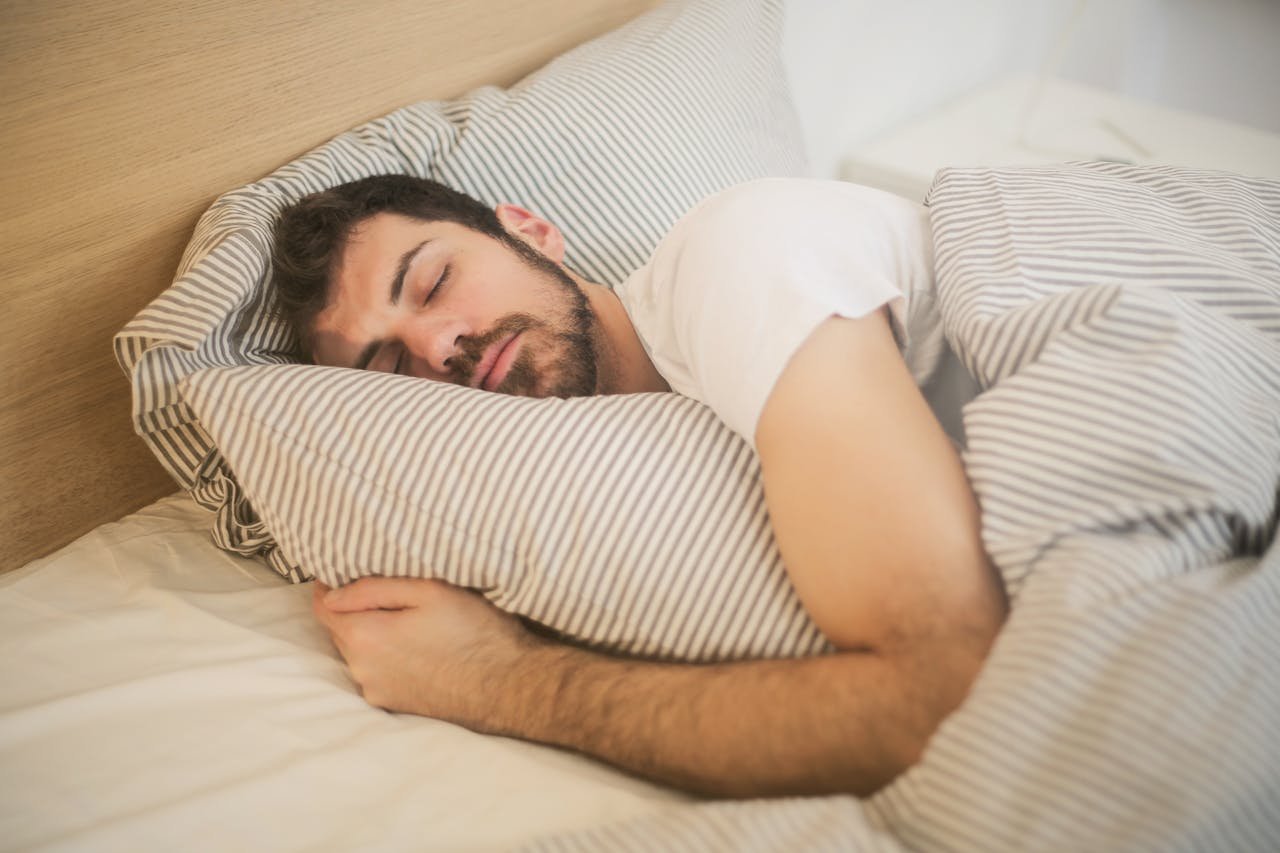
1. Trigger the “relaxation response” before bed
The opposite of fight-or-flight is what researchers call the relaxation response — a measurable state where heart rate slows, breathing deepens, and the parasympathetic (“rest and restore”) nervous system takes over. Slow breathing is the fastest way in: try inhaling for 4 counts, holding for 4, and exhaling for 6. The longer exhale is what signals safety to your nervous system. Ten minutes of this before bed can meaningfully lower arousal.
2. Protect a consistent wind-down routine
Your body craves rhythm. Going to bed and waking at roughly the same time, dimming lights an hour before sleep, and stepping away from screens all help cortisol fall naturally. A predictable routine tells your HPA axis that the day is genuinely over and it is safe to power down.
3. Use scent to shift your nervous system
This is where aromatherapy earns its place — and the evidence is surprisingly strong. A systematic review of clinical trials found that in 9 out of 10 studies (90%), lavender significantly improved sleep disorders. A separate meta-analysis of 11 randomized controlled trials covering 628 adults confirmed a significant sleep-enhancing effect.
The mechanism is real: lavender’s active compounds (linalool and linalyl acetate) act on the central nervous system, helping reduce cortisol secretion, calm the sympathetic system, and boost the parasympathetic “rest” system.
This is exactly why we created the Aura Vedanta Sleep Oil — a calming aromatherapy blend designed to support a restful wind-down ritual. A few drops on your pillow, wrists, or in a diffuser as part of your bedtime routine gives your nervous system a consistent, soothing cue that it is time to rest. (Think of it as support for relaxation and routine, not a replacement for treating any diagnosed sleep disorder.)
4. Quiet an overactive mind with energy work
If your body is tired but your mind simply will not stop, the issue is mental over-activity — that hyperarousal state. Access Bars is a gentle, deeply relaxing technique that involves lightly touching points on the head, and many people describe it as quieting the constant mental “chatter” and creating space to finally switch off. While its benefit comes largely through profound relaxation, that is precisely what an overstimulated, sleep-resistant nervous system needs. Sessions are calm, non-invasive, and many clients report feeling lighter and clearer afterwards.
5. Address the deeper root with the subconscious
Sometimes stress at night is the surface; underneath sits unresolved worry, a recurring thought pattern, or held tension that has been building for years. This is where deeper work helps. Clinical Hypnotherapy works with the subconscious patterns that keep the mind on high alert, and Reiki Healing offers a restorative, calming experience that helps the body shift out of stress mode. Both are best understood as ways to support relaxation and emotional release alongside good sleep habits.
6. Create a calming bedtime ritual you can hold
Rituals work because they are repeatable cues of safety. Beyond breath and scent, many people find comfort in a simple tactile anchor — something they put on or hold each night that signals “the day is done.” Our Good Sleep Bracelet was created for exactly this: a calming bedtime ritual to support deeper relaxation and a quieter mind. It combines four crystals traditionally associated with rest — Amethyst (to calm overactive thoughts), Smoky Quartz (to ground anxious energy), Lepidolite (to support deep relaxation and emotional release), and Howlite (to ease overthinking). Worn as part of a consistent wind-down, it becomes a gentle, grounding signal to your mind that it is time to rest. (Coming soon to our shop — ask us about it on WhatsApp.)
Frequently Asked Questions
Why can’t I sleep even when I’m exhausted? Often because your nervous system is in a state of hyperarousal — mentally and physically “switched on” from stress. Your body is tired, but elevated cortisol and mental activity keep it from powering down. Calming the nervous system, rather than forcing sleep, is the way through.
Does lavender really help you sleep? The evidence is genuinely encouraging. Across clinical reviews, the large majority of studies found lavender significantly improved sleep quality, likely by calming the nervous system and lowering cortisol. It works best as part of a consistent bedtime routine.
Can energy healing or Access Bars help with sleep? For many people, yes — primarily through deep relaxation. By helping quiet an overactive mind and settle the nervous system, these practices create the calm conditions in which sleep comes more easily. They are supportive practices, not a cure for diagnosed sleep disorders.
How long until I sleep better? Some people feel calmer after a single relaxation session or with a new bedtime routine; building lasting change usually takes a few consistent weeks. Patience and consistency matter more than intensity.
Is poor sleep from stress dangerous? Occasional stressful nights are normal. But chronic poor sleep is linked to higher cortisol and various health effects, so persistent insomnia is worth addressing — both through calming practices and, if it continues, with a doctor.
Ready to Sleep Peacefully Again?
If stress has been stealing your nights, you do not have to keep fighting your own mind. The path to rest is gentler than that — it is about helping your nervous system feel safe enough to let go.
At Aura Vedanta Healing Centre in Gurugram, Ishita Kapoor blends clinical hypnotherapy, Access Bars, Reiki, and aromatherapy to help you calm chronic stress and reconnect with restful sleep — supported by tools like our Sleep Oil and Good Sleep Bracelet for your nightly ritual.
📲 Book your free consultation on WhatsApp today — and take the first step toward truly restful nights.
This article is for educational purposes and is not a substitute for professional medical advice. The practices and products described support relaxation and wellbeing; they are not intended to diagnose, treat, or cure any sleep disorder. Please consult a doctor for persistent sleep problems.